


"Who spreads light in the gathering on the hills?" - Song of Amergin


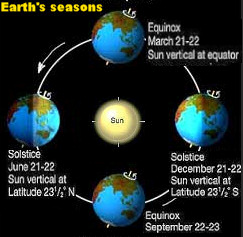
Australia and the Southern Lands experience the seasons off-set half a year to the Celtic homelands. Celebrating the Fire feasts with the progress of the southern seasons presents a dilemma, for at Beltaine on May eve, the southern seasons are turning to the winter; at Samhain on November eve, the southern seasons are at the time of rebirth at the start of summer.
Presented here is a short exposition concerning the Celtic Fire Feasts in the southern hemisphere, and also
a resource of links to pagan websites north and south, and sites for herbs and permaculture where the seasons are manifest.
The Fire Feasts in the Southern Hemisphere
Australia and the Southern Lands experience the passage of the seasons in an off-set manner compared to the Celtic homelands of Europe and the Northern Lands. For Celts and those who mark the Celtic passage of time, the marking of the Fire feasts and the progress of the Celtic calendar presents a dilemma. For at the time of Beltaine and Calan Mai on the eve of May, the southern seasons are turning to the winter; at Samhain and Calan Gaeaf on the eve of November, the southern seasons are at the time of rebirth at the start of summer.
The offset seasons have presented their dilemma for all of the time of European settlement in the Southern lands, and the seasonal affinities of great Christian celebrations such as Easter and Christmas have continued to be marked with springtime and snowflake imagery in deference to their northern origin. Some development of southern seasonality has seen Santa adapting quite well to the warm summer nights around Christmas where takes his tea from the billy with a stockman: this is epitomised by the famous 1964 painting on the Arnotts biscuit tin lid of 'Santa and the Drover' by the Jamberoo, NSW artist Jack Waugh (shown below).
The Celtic calendar and the four Celtic fire feasts are deliberately associated with the seasons and are celebrations of life and the world about us as well as ourselves and our aspirations. As such, the southern seasons present their dilemma more profoundly: It is simply not appropriate in May to feast for the summer, at the start of the southern winter; Nor does it make any sense to reflect in assembly in November when the land has just come alive. In the Southern lands, November is the lucky summertime; The flourish of red bottle-brushes is at full bloom, oak trees have placed on their green mantles and migratory birds have returned from the north.

This transformation is clearly manifest in the direction of the Sun's path through the Southern skies, rising to the north and traversing a counter-clockwise course - deosil in the Southern hemisphere is a leftward motion and so the natural action in describing a circle. See for example the Temple of the Dark Moon .pdf article for a discussion of this. From the east the path travels to the north and warmth, setting from that direction to the west and returning under the earth through a southerly poleward motion back to dawn in the east.
The Wheel of the Year followed by Wicca, neo-Druids and similar groups is similarly offset by the seasonal progression in the southern hemisphere. Philosophically, the Wheel of the Year symbolises a cycle of life, death and rebirth and derives eight key turning points called Sabbats and Esabats from Celtic, Germanic, Egyptian and Latin mythology. The Wheel is generally held to begin at the start of the winter half of the year, coinciding with Halloween, or less often the winter solstice around Christmas. While the cold and dark beginning to the pagan Wheel differs from the summertime beginning of the traditional Celtic year (as explained in the main Fire Feast and Celtic Calendar sections on this site), the off-set seasons in the southern hemisphere present an identical dilemma.
 Further below on this page are provided links to several Australian and other pagan websites, where each presents their philosophy in this regard; also listed are sites concerned with herbs and permaculture, where life responding to light comes to the fore! An Australian perspective of the solar and fire festivals is presented at Re-earth the cities! within a wider context of sustainable and natural city living.
At first glance, there appears to be a simple solution. Seasonally, the European feasts are able to be transposed by six months and successfully celebrated in complementary fashion. November eve marks the Southern year's first weather-movement of summer, its cét-Soman, its Samon moon, its opening of Samhradh. As such the Celtic Fire Feast of Beltaine is on this basis able to be marked with great satisfaction at November eve - 'Southern Beltaine'. May eve marks the Southern year's repose, its Giamon moon, its Mí Gam at the opening of Geimhreadh. So the Celtic Fire Feast of Samhain is able to be celebrated in like manner, as a May assembly at summer's end. High summer and the Lughnasadh are seasonally matched at February eve; and Springtime's feast of Oimelc/Imbolg and Brigid's fiery inspiration are attendant at the eve of August. Seasonally these all may be marked under their traditional Celtic names, six months off-set to their true dates and labelled 'southern'.

On the Wheel of the Year, this offseting solution has been followed, and consequently southern "Samhain" is marked on May eve, southern "Yule" at the winter solstice in June, southern "Imbolg" on August eve, southern "Ostara" at the vernal equinox of September, southern "Beltane" on November eve, southern "Litha" at the summer solstice in December, southern "Lughnasa" on February eve, and southern "Mabon" at the autumnal equinox in March. See for example the Shadows of Oz website for this perspective.
There is, however, a reason for finding this half-year shifting of dates wanting, because the ancient sources tell us that in addition to the waxing and waning of the seasons, the Celtic year was also clearly linked to the stars. The start of the Celtic year is associated with the rise of the Pleaides just as strongly as it is with the start of the season of summer, so astronomically and astrologically there are greater considerations. Both North and South, the Celestial Sphere remains constant, the stars rising in their order throughout the turn of the year. In this aspect the Southern Hemisphere dilemma comes to the fore, for while the seasons may anticipate the Fire Feasts by simple transformation of date, the Stars do not.
So because of the way they are celebrated by season and stars, the Celtic calendar feasts are really not translocatable, and are set in their European context. This is no different to the way that January modernly marks the start of the Gregorian calendar throughout the world, which in the Southern Hemisphere is just after the summer solstice. In like manner, the Celtic year has a single world-wide beginning, namely the lunation of May, or in its Gregorian form May 1st (as explained in the Celtic calendar), so Mids Samon and the feast of Beltaine occur in the first days of winter in the Southern lands.
Because the Celtic calendar's celebrations are overtly seasonal and devoted to life responding to light, and recognising that it is the Celtic tradition and its celebrations rather than indigenous traditions whose developments were moulded by the southern seasons and the southern skies, a solution is offered here that may provide a satisfactory Southern Celtic response.
Caer Australis proffers the names Teine Samhradh Deas, Teine Grian Deas, Teine Geimhreadh Deas and Teine Earrach Deas for the Southern Fires of Summer (November, at Samhain), High Summer (February, at Oimelc), Winter (May, at Beltaine) and Springtime (August, at Lughnasa) respectively, which recognise that each season's celestial arrangements in the South run opposite to those of the Celtic homelands and the Northern lands. For the Celtic calendar, the month of Samon may be referred to as the Southern Giamon Lunation, and so on throughout the calendar year. This arrangement of Southern Fires and Lunations express the southern seasons in Celtic terms, while recognising the Celtic Fire Feasts and the months of the year are European in origin and design.

Teine Samhradh Deas
'Southern Beltaine'
Held on the Eve of November
And they named him Gwri Golden-hair
Green bursts out on every herb!

Teine Grian Deas
'Southern Lughnasa'
held on the Eve of February
He is the Ioldhanach!
The greenwoods girl gave a gift
Teine Geimhreadh Deas
'Southern Samhain'
Held on the Eve of May
And he made his way to Eas Ruaidh
Low the sun and short his course

Teine Earrach Deas
'Southern Oimelc'
Held on the Eve of August
Four white trefoils were her track
Let Brigit in! She is welcome!

The arrangement of the Celtic year:
Beltaine and Samhain in Cormack's Glossary
The great Celtic fire feasts are celebrations of the waxing and waning of the year - they mark the start of each Celtic season.
In The Celtic Fire Feasts the Maytime beginning of the year is explained.
"Samrad didiu ríad reites grian, is and is mo doatne a soillsi;
Cetsoman .i. cetsámsin .i. cétlúd síne samraid;
Gam quasi gamos isin greic, nouimber .i. in mí gaim iar samuin"
"The spring for ploughing and sowing, and the beginning of summer for the end of the strength of corn,
and the beginning of autumn for the end of the ripeness of corn and for reaping it, and the winter for consuming it."
"For two divisions were formerly on the year, namely, summer from Beltaine the first of May, and winter from Samuin to Beltaine."
CÉTEMAIN, cain cucht,
rée rosaír rann;
canait luin laíd laín
día laí grían gaí ngann.
Summer-time, season supreme!
Blackbirds sing a full lay
Man flourishes, the maiden buds
Blossom covers the world.
adapted from Kuno Meyer, Four Old-Irish Songs of Summer and Winter (London, 1903)
the full song is given in Summer in the Grove
"God knew how fitting the tender start of the growth of May would be/
Great is the dignity of bright green May, godson of the Immaculate Lord/
the coming of May is a blessing for me. God and Mary decided wisely and steadfastly to uphold May."
- from the poem 'Mis Mai' by Dafydd ap Gwilym in the mid fourteenth century

Summer: Beltaine
held on the May Eve.
The lark sings at the top of his voice,
Welcome, splendid summer!

High Summer: Lughnasa
held on August Eve.
He is the Ioldhanach!
Winter: Samhain
held on November Eve.
Think on the beginning of clear winter:
Its cold, and want of beauty!

Spring: Oimelc
held on February Eve.
White trefoils wherever she went

 The Grove
As the wood is the blackbird's heritage where he sings of joy in summer and of the cold in winter,
so the Grove is a place of celebration of the seasons
Enjoy these songs amongst the oaks of the Grove!
The ancient division of the Celtic year
The development of the May feast at the commencement of the Celtic year unfolds as follows:
1st Century and before: Mids Samon ---> 10th century and after: Céitemain, cetsoman ---> modern Bealtaine;
The development of the November feast mid-way through the Celtic year unfolds as follows:
1st Century and before: Mids Giamon ---> 10th century and after: Mí Gam, gaimrith ---> modern Mí na Samhna or Samhain
The Coligny Calendar and the Celtic year explored and presented
The exploration and expression of the Celtic Seasons is widespread world-wide and well developed across Australia. Here are some links to further interpretations and views from the Southern perspective and further afield that will stimulate further thought:
Links to wheel of the year sites - south and north
links to herb and urban ecology sites
Reaching to Celtic roots and myth is one way of finding meaning, understanding and fulfilment in life. Presented here are Spiritualistic, Wiccan and Pagan sites that also endevour on the same journey of discovery. Some of the people behind the links have been supportive of Caer Australis over the years, others are excellent starting points as they provide links to network within Australia. If you believe there is a Link that should be included, please submit via our Contact Form.
The following links on this page are to sites providing information about the rich storehouse of edible and meicinal herbs and practical advice for their growth. The principle of growing and using whole plant parts include the simple pleasure of tending to the garden, good for the mind and the soul, the inclusion of variety and flavour in the diet, and, for the medicinal aspect, low doses of principal active agents and the inclusion of additional secondary agents.
The following links are to sites each in their own way concerned with sustainable ecological solutions where participation by people takes place. The principle of re-earthing is that of living in a way where we identify with the earth - recognising, realising and acting. We live in a way as if we were separate from the earth, and each of us can redirect our manners toward re-earthing.
© Caer Australis 2011: From Coogee in Sydney's eastern beaches NSW Australia
The Celtic Fire Feasts
Fire Feast Introduction AD433: Patrick's fire Beltaine Lughnasa Samhain Imbolc Southern hemisphereDivision of the Year
Ar is dé roinn nobid for an mpliadain and .i. in samrad o beltine co samfuin; in gemred o samfuin co beltine.
For two divisions were formerly on the year, namely, summer from Beltaine the first of May to Samuin, and winter from Samuin to Beltaine. - from Tochmarc Emer
